People-Search Sites: How Data Aggregators Work and Why Opt-Outs Fail
Data brokers profit from public records, meaning your personal details remain visible even after you close accounts on social media platforms.

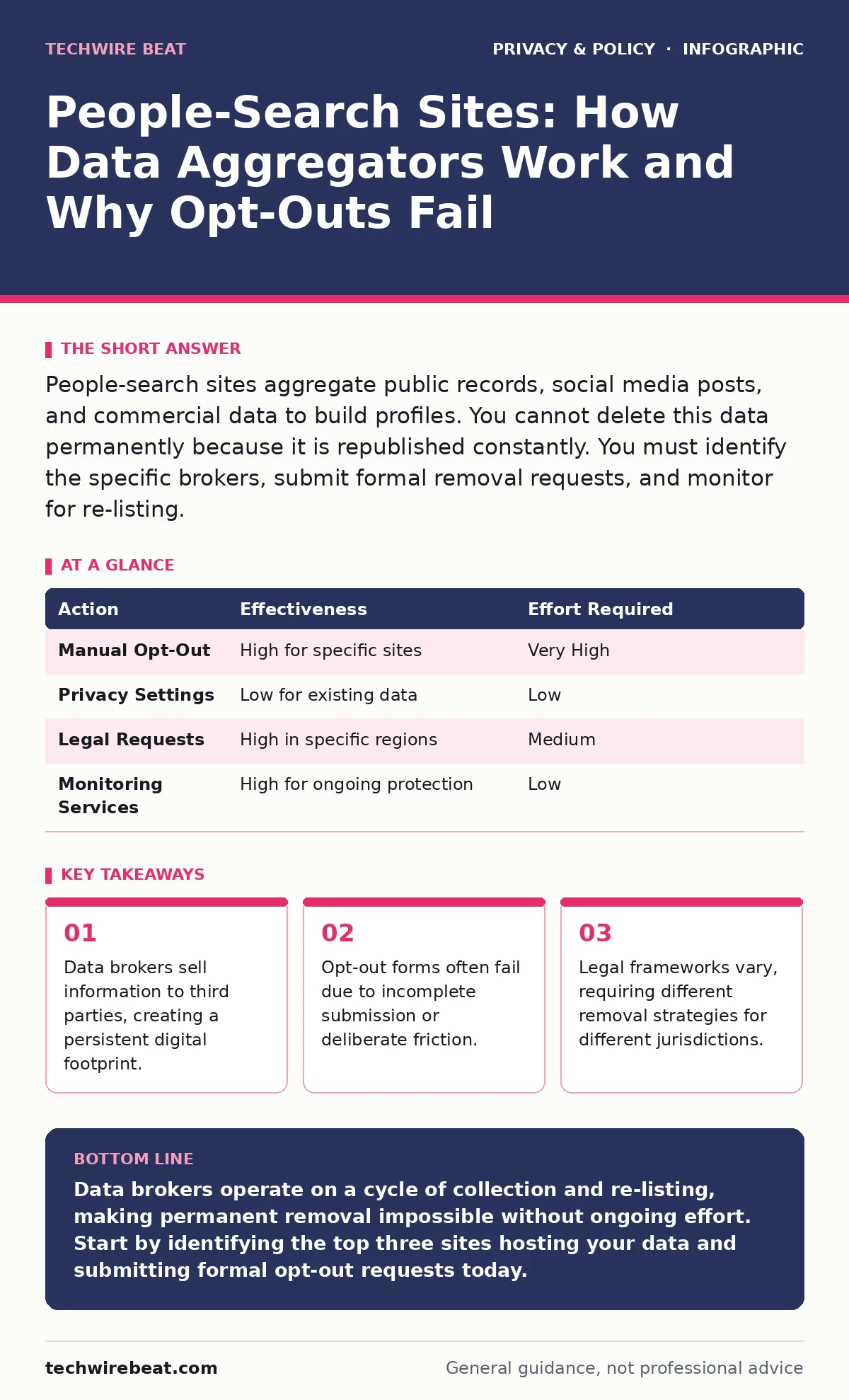
People-search sites aggregate public records, social media posts, and commercial data to build profiles. You cannot delete this data permanently because it is republished constantly. You must identify the specific brokers, submit formal removal requests, and monitor for re-listing.
What exactly is a people-search site?
A people-search site is a data aggregator that collects personal information from public records, social media, and commercial databases to create searchable profiles. These platforms do not generate new data; they compile existing information into a single, accessible interface. The business model relies on selling access to this compiled data to advertisers, recruiters, and background check services.
Where do they get my address and phone number?
They source this data from court records, property deeds, voter registration lists, and business filings. Many of these sources are publicly accessible by law, meaning the information is already in the public domain. The aggregator simply indexes and repackages this data, making it easier to find than searching individual county websites. This aggregation creates a centralized target for identity theft and harassment.
Why did my data appear after I deleted my social media accounts?
Deleting your social media accounts does not remove the data already scraped by aggregators. These sites take snapshots of your public profile at various intervals. Even if you delete the original post or account today, the aggregator retains the archived version. Furthermore, they may have already sold that snapshot to other data brokers, who now hold independent copies of your information.
How do I remove my information from these sites?
You must locate the specific privacy policy or opt-out page for each individual data broker. Most sites require you to submit a request proving your identity, often via photo ID or a code sent to your phone. After submission, the site will remove your profile from its public search results. However, this process must be repeated for every site that hosts your data, as there is no central "delete me" button.
Why does my data keep coming back online?
Re-listing occurs because data brokers continuously update their databases with new public records and commercial feeds. If you do not monitor your digital footprint, new information will be added to your profile shortly after removal. Some brokers also share data with partner networks, meaning one removal does not guarantee deletion across all affiliated sites. This cycle requires ongoing maintenance rather than a one-time fix.
See also: Social Media Privacy Concerns: How Platforms Use Your Data · Data Privacy Principles: How to Protect Your Digital Life
Are there legal ways to stop them from collecting my data?
Certain jurisdictions have enacted laws that allow residents to request the deletion of their personal data from brokers. These laws vary significantly by region, with some requiring brokers to provide a free, easy opt-out mechanism. In areas without specific legislation, you may need to rely on general privacy rights or consumer protection laws. Understanding your local legal framework is necessary to determine your available remedies.
What is the difference between a data broker and a background check site?
Data brokers sell raw personal information to a wide range of commercial buyers. Background check sites often use this broker data but add layers of analysis or verification for specific purposes like employment screening. The distinction matters because background check sites are often subject to stricter regulatory requirements, such as the Fair Credit Reporting Act in some regions. Data brokers generally face fewer restrictions on how they sell and share your information.
How can I prevent new data from being collected?
You can reduce the amount of public data available by limiting your online presence and adjusting privacy settings on social media. Using a secure DNS can help prevent your browsing habits from being logged by certain network providers. Additionally, you might consider using a privacy-focused email address for non-essential sign-ups. For a deeper dive, see our guide on reducing your digital footprint for more strategies. Regular privacy audits can also help you identify where your data is exposed.
| Action | Effectiveness | Effort Required |
|---|---|---|
| Manual Opt-Out | High for specific sites | Very High |
| Privacy Settings | Low for existing data | Low |
| Legal Requests | High in specific regions | Medium |
| Monitoring Services | High for ongoing protection | Low |
Why can't I just use an ad blocker to hide my data?
Ad blockers prevent advertisements from loading on websites, but they do not stop data aggregators from hosting your profile. These sites do not rely on ads for their primary data collection method; they rely on database indexing. Blocking ads might prevent some tracking scripts, but it will not hide your name, address, or phone number from a search query. For more on managing online tracking, see our guide on ad blockers.
What is the hidden cost of opting out?
The primary cost is time, as you must navigate dozens of different websites with varying requirements. Some sites may charge a fee for expedited removal or for providing detailed reports on who accessed your data. Additionally, the friction of the opt-out process is designed to discourage users from completing it. This deliberate inconvenience allows brokers to maintain large databases with minimal effort.
How do I know if I have been doxxed by a broker?
Doxxing occurs when someone maliciously publishes your private information. If you find your home address, phone number, or family details on a people-search site, you have been effectively doxxed by the aggregator. This exposure can lead to harassment, stalking, or identity theft. Immediate action is required to remove this data and secure your accounts.
Can I sue a people-search site for privacy violations?
Litigation is complex and often unsuccessful unless you can prove specific damages or a violation of local privacy laws. Most sites include terms of service that limit their liability for the accuracy or use of the data. However, emerging privacy laws in some regions are creating new avenues for legal action. Consulting with a legal expert is advisable if you have suffered significant harm. For context on regulatory environments, see privacy laws for small businesses.
What role do consent management platforms play here?
Consent management platforms help websites comply with cookie and data consent laws, but they do not typically manage data broker opt-outs. These platforms focus on user interaction with a specific website, not the aggregation of data from third-party sources. Therefore, they offer little protection against people-search sites. For more on managing online permissions, see consent management.
Is there a one-click solution to remove all my data?
No single tool can permanently remove your data from all people-search sites. While some services offer automated opt-out assistance, they cannot guarantee complete or permanent deletion. Data brokers continuously update their databases, and new aggregators emerge regularly. Ongoing vigilance and manual verification are necessary to maintain privacy. For broader online safety, consider secure DNS to protect your browsing activity.
Key takeaways
- Data brokers sell information to third parties, creating a persistent digital footprint.
- Opt-out forms often fail due to incomplete submission or deliberate friction.
- Legal frameworks vary, requiring different removal strategies for different jurisdictions.
Data brokers operate on a cycle of collection and re-listing, making permanent removal impossible without ongoing effort. Start by identifying the top three sites hosting your data and submitting formal opt-out requests today.
Frequently asked questions
How long does it take for data to be removed?
Removal times vary from a few days to several weeks, depending on the broker's processing speed and verification requirements.
Can I stop data brokers from collecting my information in the first place?
You cannot fully stop collection, as much of the data is public record, but you can limit exposure by reducing your public digital footprint.
Are people-search sites illegal?
In most jurisdictions, they are legal as long as they use publicly available information and comply with local privacy laws.
What if I live in a country with strong privacy laws?
Strong privacy laws may provide easier opt-out mechanisms or legal grounds for removal, but you must still actively exercise these rights.
How this guide was produced: written by the TechWire Beat editorial team with AI assistance, checked against the public references listed below, and reviewed when the facts change. See our editorial policy or report an error.