Healthcare Data Breach Response: Steps to Contain and Recover
Disconnecting affected systems immediately prevents lateral movement, but preserving memory state before shutdown is critical for forensic evidence recovery.

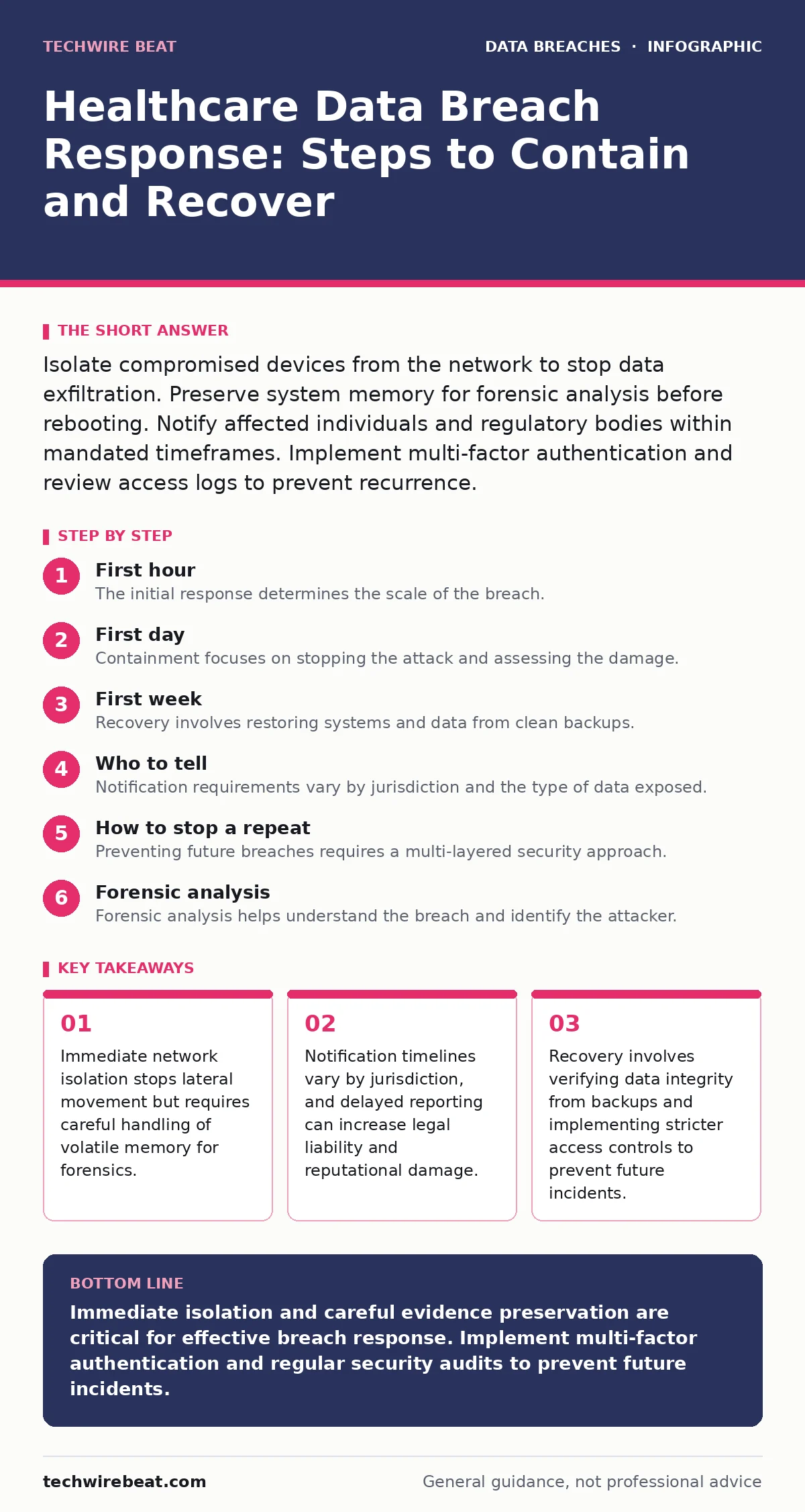
Isolate compromised devices from the network to stop data exfiltration. Preserve system memory for forensic analysis before rebooting. Notify affected individuals and regulatory bodies within mandated timeframes. Implement multi-factor authentication and review access logs to prevent recurrence.
First hour
The initial response determines the scale of the breach. You must act quickly to limit exposure while preserving evidence for later analysis. Panic often leads to destructive actions that hinder investigation.
- Identify the scope of the breach by checking which systems are affected.
- Isolate compromised devices from the network to prevent lateral movement.
- Preserve system memory before rebooting to retain forensic evidence.
- Activate your incident response team and assign specific roles.
- Document all actions taken with timestamps for legal and audit purposes.
First day
Containment focuses on stopping the attack and assessing the damage. You need to determine what data was accessed and how the attacker entered the system. This phase requires coordination between IT, legal, and communications teams.
- Isolate affected network segments to prevent further spread.
- Disable compromised user accounts and reset credentials.
- Analyze logs to identify the entry point and attack vector.
- Assess the types of data exposed, such as patient records or financial information.
Understanding the entry point is vital for effective containment. Attackers often use phishing emails or stolen credentials to gain initial access. Reviewing email logs and authentication records helps identify these vectors.
First week
Recovery involves restoring systems and data from clean backups. You must verify the integrity of backups before restoring them to ensure they are not compromised. This process can take days or weeks depending on the scale of the breach.
- Restore systems from verified clean backups.
- Monitor network traffic for signs of reinfection.
- Implement additional security controls, such as multi-factor authentication.
- Review and update incident response plans based on lessons learned.
Restoring systems is not just about bringing them back online. You must ensure that the vulnerabilities exploited by the attacker are patched. Regular security audits help identify and fix these weaknesses.
Who to tell
Notification requirements vary by jurisdiction and the type of data exposed. You must inform affected individuals, regulatory bodies, and sometimes law enforcement. Delayed notification can result in legal penalties and loss of trust.
- Notify affected individuals promptly with clear information about the breach.
- Report the breach to relevant regulatory bodies within mandated timeframes.
- Inform law enforcement if criminal activity is suspected.
- Update stakeholders regularly with progress on the investigation and recovery.
Communication should be transparent and empathetic. Affected individuals need to know what data was exposed and what steps they can take to protect themselves. Providing resources such as credit monitoring services can help mitigate the impact.
How to stop a repeat
Preventing future breaches requires a multi-layered security approach. You must address the vulnerabilities that allowed the breach to occur and implement stronger controls. Regular training and awareness programs are also essential.
- Implement multi-factor authentication for all user accounts.
- Conduct regular security audits and penetration testing.
- Train staff on recognising phishing emails and other social engineering tactics.
- Review and update access controls to ensure least privilege.
Security is an ongoing process. You must continuously monitor and improve your defences to stay ahead of evolving threats. Regular updates and patches are critical for maintaining system integrity.
See also: Credential Dumps Explained: How Stolen Passwords Work · Insider Data Theft Prevention Checklist for Secure Operations
Forensic analysis
Forensic analysis helps understand the breach and identify the attacker. You must preserve evidence carefully to ensure it is admissible in legal proceedings. This process requires specialised tools and expertise.
- Collect and preserve digital evidence from affected systems.
- Analyse logs and network traffic to reconstruct the attack.
- Identify the attacker's methods, tools, and objectives.
- Prepare a detailed report for legal and regulatory purposes.
Forensic analysis is complex and time-consuming. You may need to engage external experts to assist with the investigation. Proper evidence handling is crucial for successful prosecution.
Legal and regulatory compliance
Compliance with legal and regulatory requirements is critical. You must understand the specific obligations in your jurisdiction and ensure timely reporting. Failure to comply can result in significant fines and legal action.
- Understand the specific notification requirements in your jurisdiction.
- Document all actions taken during the response and recovery process.
- Cooperate with regulatory bodies and law enforcement as required.
- Review and update privacy policies and procedures to align with regulations.
Legal compliance is not just about avoiding penalties. It also helps maintain trust with patients and stakeholders. Transparent communication and proactive measures demonstrate a commitment to data protection.
Long-term resilience
Building long-term resilience requires a proactive approach to security. You must invest in people, processes, and technology to protect against future threats. Continuous improvement is key to staying ahead of attackers.
- Invest in advanced security tools and technologies.
- Develop a culture of security awareness and responsibility.
- Regularly update and test incident response plans.
- Engage with industry peers and share best practices.
Resilience is about more than just technology. It involves creating a culture where security is everyone's responsibility. Regular training and awareness programs help reinforce this mindset.
Key takeaways
- Immediate network isolation stops lateral movement but requires careful handling of volatile memory for forensics.
- Notification timelines vary by jurisdiction, and delayed reporting can increase legal liability and reputational damage.
- Recovery involves verifying data integrity from backups and implementing stricter access controls to prevent future incidents.
Immediate isolation and careful evidence preservation are critical for effective breach response. Implement multi-factor authentication and regular security audits to prevent future incidents.
Frequently asked questions
How long does it take to recover from a healthcare data breach?
Recovery time varies depending on the scale of the breach and the complexity of the systems involved. It can take days to months to fully restore operations and ensure security.
What are the legal consequences of a healthcare data breach?
Legal consequences can include significant fines, legal action from affected individuals, and increased regulatory scrutiny. Compliance with notification laws is critical to mitigating these risks.
How can I protect patient data from insider threats?
Implement strict access controls, monitor user activity, and conduct regular training on data handling procedures. Insider threats can be mitigated by ensuring least privilege and auditing access logs.
What is the role of encryption in preventing data breaches?
Encryption protects data at rest and in transit, making it unreadable to unauthorised users. While not a complete solution, it significantly reduces the risk of data exposure in case of a breach.
How this guide was produced: written by the TechWire Beat editorial team with AI assistance, checked against the public references listed below, and reviewed when the facts change. See our editorial policy or report an error.