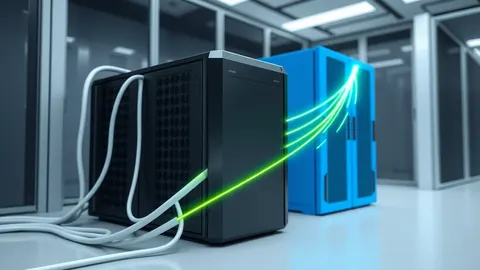
Salience Labs secures funding for optical switching to ease AI data centre strain
Oxfordshire photonics firm raises capital to build switches that keep data as light, aiming to cut latency and power use in large AI clusters.
Key points
- Salience Labs raised $125 million in a Series B round led by Bullhound Capital.
- The company will use funds to scale manufacturing and open a second office in California.
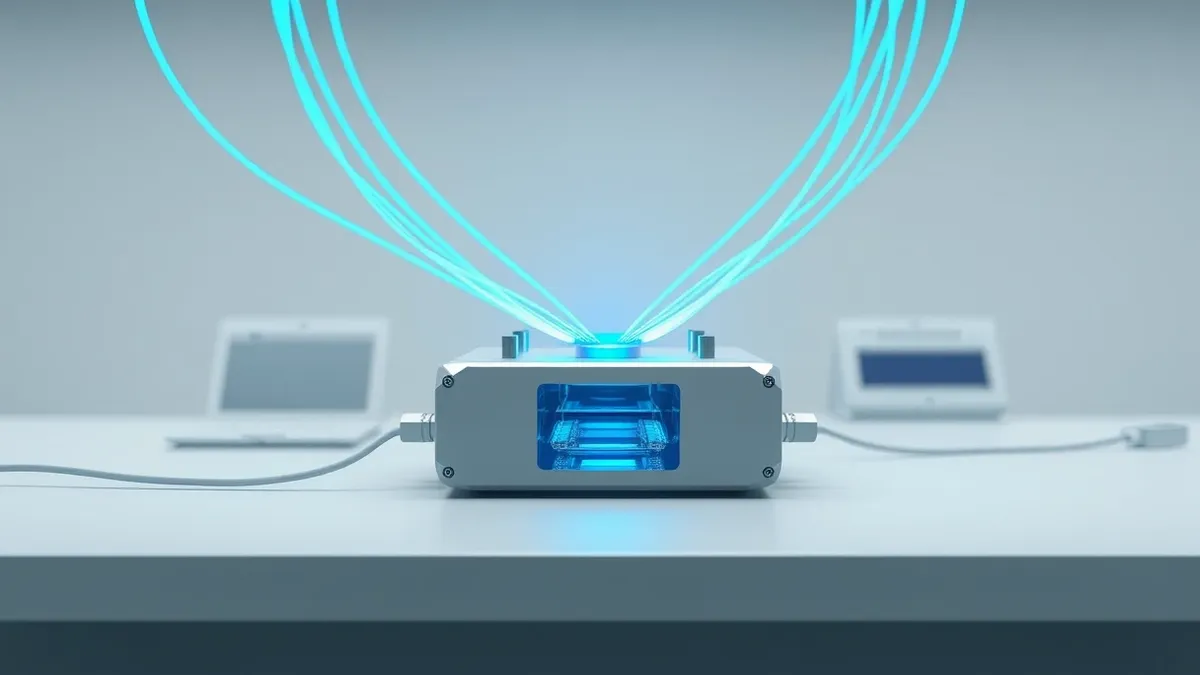
- Its technology uses all-optical circuit switching to avoid electrical signal conversion bottlenecks.
Salience Labs has secured $125 million in Series B funding to develop optical switching technology designed to reduce latency and power consumption in artificial intelligence data centres. The Oxfordshire-based startup aims to address the growing strain on existing networking infrastructure caused by the rapid expansion of AI computing clusters.
The investment round was led by Bullhound Capital, with participation from Intel Capital, AMD Ventures, SBI Group, Hudson River Trading and the British Business Bank. Existing investors including Applied Ventures, Oxford Science Enterprises, Cambridge Innovation Capital and Silicon Catalyst Ventures also participated in the oversubscribed round, according to reports from SiliconANGLE and The Next Web.
What we know
Salience Labs plans to use the capital to scale its manufacturing capabilities and open a second engineering office on the US West Coast. The company, founded in 2021, is built on research from the University of Oxford and the University of Munster. It previously showcased a 64-port all-optical switch at ECOC in September, following a 32-port version validated by Keysight in the spring.
The technology targets high-density workloads by routing data directly on-chip using silicon photonics, rather than converting optical signals to electrical form and back again. Co-founder and chief executive Vaysh Kewada stated that traditional electronic switches cannot keep up with the throughput demands of clusters containing tens of thousands of graphics processing units. This results in latency bottlenecks and increased power costs.
The company has not named any specific customers or provided deployment dates for its upcoming 128 and 256-port switches. Nvidia did not participate in the funding round. The Next Web noted that a British rival, Oriole Networks, is further along in deploying similar technology in the UK government’s ARIA lab, having raised approximately $35 million.
Defender's checklist
- Monitor vendor announcements for new optical interconnect standards that may require hardware upgrades.
- Assess current data centre power budgets against the energy efficiency claims of new switching technologies.
- Review network latency metrics to identify bottlenecks in existing electronic switching fabrics.
- Evaluate the compatibility of current GPU clusters with emerging all-optical routing architectures.
The background in plain language
Traditional data centres convert light signals into electricity to route them, then back to light. This process creates delays and uses significant power. Optical circuit switching keeps the signal as light throughout the journey, establishing a direct path. This approach reduces the time data takes to travel between processors. Teams usually check whether their current network architecture can handle the bandwidth required by growing AI workloads. They should also consider how power consumption scales with additional compute nodes.
What to do and how to stay safe: Salience Labs
- Review current network architecture diagrams to identify where optical-to-electrical conversions occur.
- Monitor industry reports for updates on silicon photonics adoption in enterprise data centres.
- Assess power consumption trends in existing AI clusters to anticipate future infrastructure needs.
- Engage with vendors to understand the timeline for next-generation optical switching deployments.
Step-by-step guide: AI Governance for Small Teams: Practical Controls and Cost
General security guidance from the TechWire Beat newsroom. It is not confirmed advice from the organisations named in this story.
Frequently asked questions
Who led the funding round for Salience Labs?
Bullhound Capital led the $125 million Series B round, with participation from Intel Capital, AMD Ventures and others.
What technology does Salience Labs develop?
The company develops all-optical circuit switching technology that routes data using light without converting it to electrical signals.
Has Salience Labs named any customers?
No, the company has not disclosed any specific customers or deployment dates for its switches.