ASML confirms it cannot satisfy AI chip tool orders for 2027 and 2028
Dutch equipment maker ASML admits supply constraints will persist through next year as artificial intelligence demand surges.
Key points
- ASML states it will be unable to fully meet demand for its chipmaking tools in 2027 and 2028.
- The company raised the lower bound of its 2026 sales guidance to a range of €44 billion to €45 billion.
- Customers are already expressing interest in placing orders for delivery in 2029 and 2030.
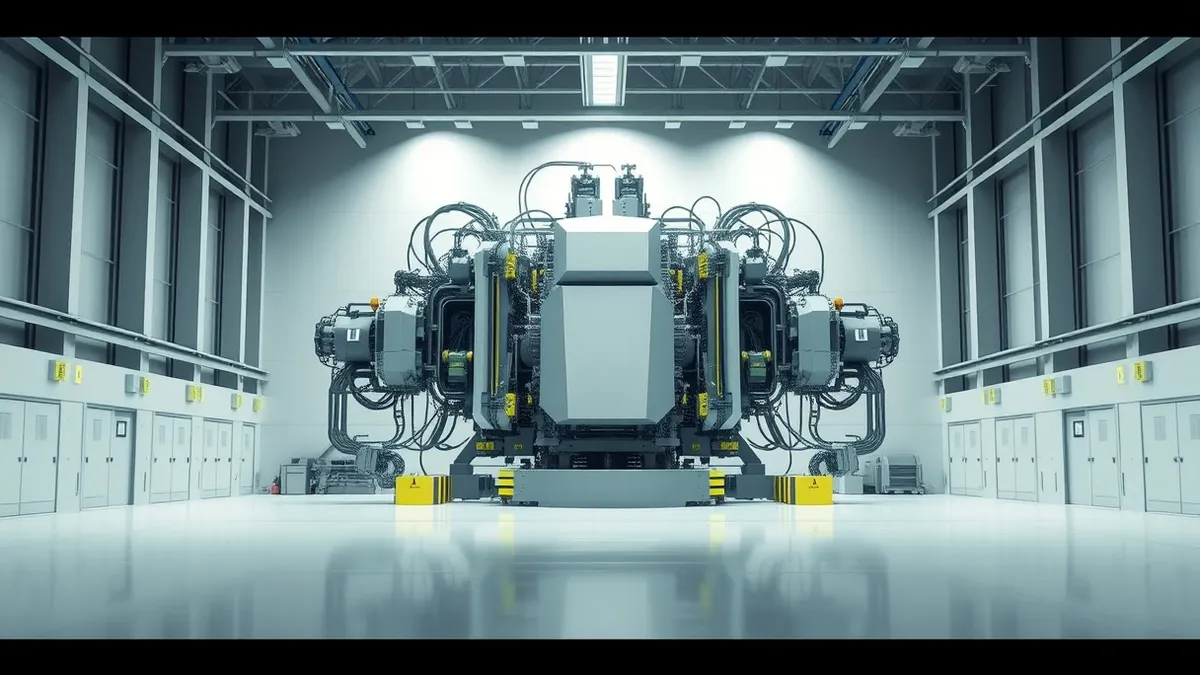
ASML, the sole manufacturer of extreme ultraviolet lithography machines, has announced that it cannot satisfy the current demand for its equipment in the upcoming two years. This admission highlights the intense pressure artificial intelligence development places on global semiconductor infrastructure. The Dutch firm confirmed on Wednesday that its existing supply plans are insufficient to cover orders from major chipmakers through 2028.
Chief executive Christophe Fouquet stated that customers request more tools daily, with some looking ahead to 2029 and 2030. Consequently, ASML adjusted its financial outlook, lifting the low end of its 2026 sales guidance. Bloomberg reported the new range sits between €44 billion and €45 billion. Following the announcement, ASML shares rose 2.8% in Amsterdam to €1,551.60.
What we know
ASML had previously planned to add 30% more capacity for 2027 and was studying a further 30% increase for 2028. Fouquet now indicates the company is investigating ways to expand beyond those figures. The most advanced lithography machines take more than a year between order and delivery, meaning current orders reflect firm commitments rather than speculative interest.
Pricing adjustments with key customers are also underway, with effects visible partly through 2027 and fully from 2028. China remains a significant market, accounting for about a fifth of this year’s revenue. A second Dutch campus is under construction, with its first phase due in 2029, aligning with the horizon customers are now asking for quotes.
Defender's checklist
- Monitor supply chain announcements for lead time extensions on critical hardware components.
- Review contract terms regarding delivery delays and potential price adjustments for large capital equipment.
- Assess alternative sourcing strategies if specific manufacturing tools become unavailable for extended periods.
- Track competitor financial disclosures to gauge broader industry demand trends and capacity constraints.
The background in plain language
Semiconductor manufacturing relies on highly specialised equipment that only a few vendors produce. When demand for chips outpaces the ability to build these machines, lead times extend significantly. Organisations must plan procurement years in advance because new facilities take time to construct. Supply bottlenecks in this sector can ripple through entire technology ecosystems, affecting product launches and service availability globally.
What to do and how to stay safe: ASML
- Audit your organisation’s dependency on specific semiconductor manufacturing equipment or components.
- Establish long-term contracts or letters of intent with suppliers to secure future capacity.
- Diversify your supply chain to reduce reliance on single-source vendors for critical infrastructure.
- Maintain open communication with vendors to receive early warnings about capacity changes or delays.
Step-by-step guide: AI Governance for Small Teams: Practical Controls and Cost
General security guidance from the TechWire Beat newsroom. It is not confirmed advice from the organisations named in this story.
Frequently asked questions
Why is ASML unable to meet demand for its chipmaking tools?
According to Reuters, ASML states that AI-driven demand for its chip-printing tools is so strong that its current supply plans cannot fully meet orders for 2027 and 2028.
How did ASML adjust its financial guidance for 2026?
Bloomberg reported that ASML raised the low end of its 2026 sales guidance to a range between €44 billion and €45 billion.
Are customers looking beyond 2028 for orders?
Yes, The Next Web reports that some customers are expressing interest in placing orders for 2029 and even 2030.