Intel’s new data centre GPUs offer record memory for AI inference tasks
The chipmaker’s D-series graphics units feature up to 480GB of LPDDR5X memory to handle demanding artificial intelligence workloads in enterprise environments.
Key points
- Intel has unveiled its GPU D-series specifically designed for data centre operations.
- The hardware features up to 480GB of LPDDR5X memory, a capacity typically found in laptops.
- This unusually large memory pool is intended to support demanding AI inference workloads.
Intel has introduced a new range of graphics processing units aimed at enterprise data centres, marking a significant shift in how the company approaches memory capacity for artificial intelligence tasks. According to TechRadar, the new D-series GPUs are built to handle demanding inference workloads by leveraging an unusually large amount of system memory. This move allows organisations to process complex AI models without relying solely on traditional high-bandwidth memory configurations often seen in competitor hardware.
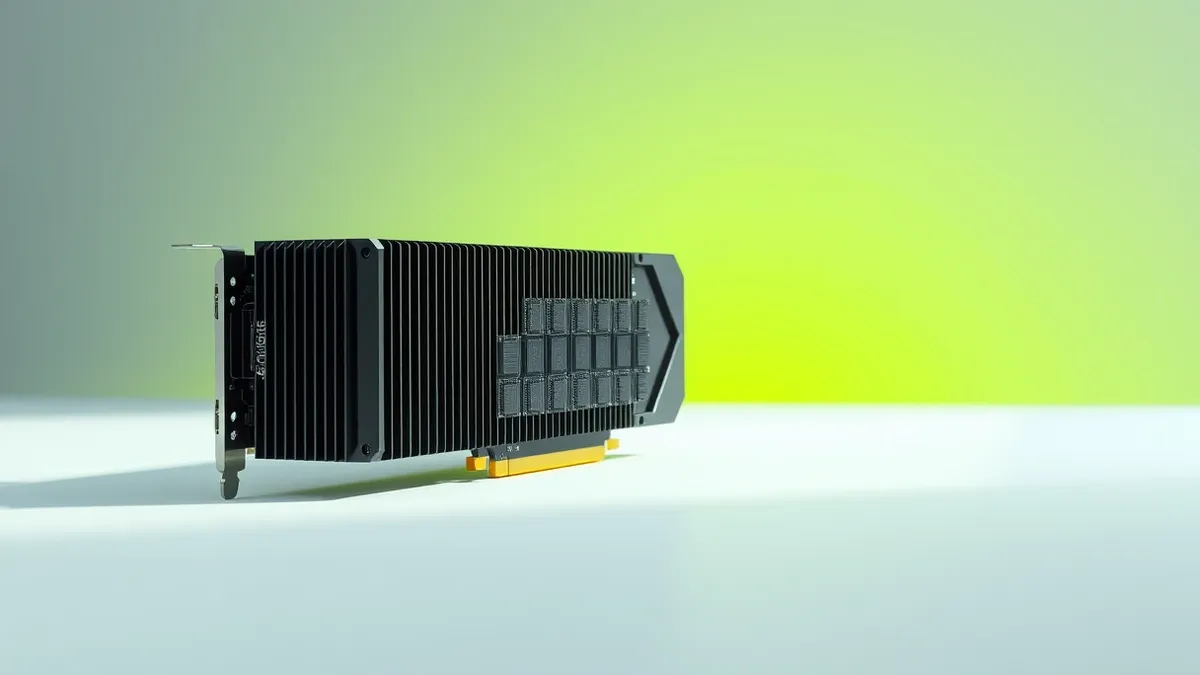
The defining characteristic of this launch is the memory specification. Intel’s GPU D-series units come equipped with up to 480GB of LPDDR5X memory. This figure represents a new record for GPU memory capacity, according to the reporting. By utilising LPDDR5X, a type of low-power double data rate memory commonly associated with laptop computers, Intel is attempting to differentiate its data centre offerings from standard server graphics cards that typically use different memory architectures.
What we know
The announcement was covered by TechRadar, with reporting by Efosa Udinmwen. The outlet highlights that the D-series is explicitly marketed for data centre environments rather than consumer or workstation use. The key technical differentiator cited is the integration of laptop-grade LPDDR5X memory into a server-class GPU. TechRadar notes that this configuration sets a new benchmark for GPU memory size, reaching 480GB per unit. No specific performance benchmarks or pricing details were included in the provided source material.
Defender's checklist
- Verify that your data centre cooling systems can handle the thermal output of high-density GPU racks.
- Ensure your virtualisation software supports passthrough for GPUs with large memory footprints.
- Review your power supply units to confirm they can sustain the load of multiple high-memory GPUs.
- Check that your network infrastructure can handle the data throughput required for large AI inference jobs.
The background in plain language
Organisations running artificial intelligence models often face bottlenecks when trying to process large datasets. Memory capacity determines how much data a graphics card can hold and process at once. Traditionally, server GPUs use specialised, expensive memory types. By using memory common in laptops, manufacturers can offer larger capacities at potentially lower costs. Teams usually need to balance this capacity against speed, as laptop memory may operate differently than standard server memory.
What to do and how to stay safe: Intel
- Assess whether your current AI inference workloads require more than standard GPU memory limits.
- Monitor the thermal and power requirements of your existing server racks before adding new hardware.
- Consult with your hardware vendor to understand the specific performance trade-offs of LPDDR5X in a server environment.
- Once the vendor provides an update, review any new driver requirements for these specific D-series cards.
General security guidance from the TechWire Beat newsroom. It is not confirmed advice from the organisations named in this story.
Frequently asked questions
What is the main feature of Intel's new D-series GPU?
The main feature is its inclusion of up to 480GB of LPDDR5X memory, which is an unusually large capacity for a GPU.
Who is the target audience for this hardware?
The hardware is designed for data centres and is intended to support demanding artificial intelligence inference workloads.
Is this memory type common in servers?
No, LPDDR5X is typically used in laptops, making its use in a data centre GPU an unusual architectural choice.